Which machines work in each zone
A terminal has three zones. At the gate, trucks come and go. In the yard, boxes wait in stacks. At the quay, the ship is loaded and unloaded. Each zone has its own machines, and the equipment between them carries boxes from one zone to the next. For the whole route a box takes, read how a container moves through a port.
At the quay
Quay cranes
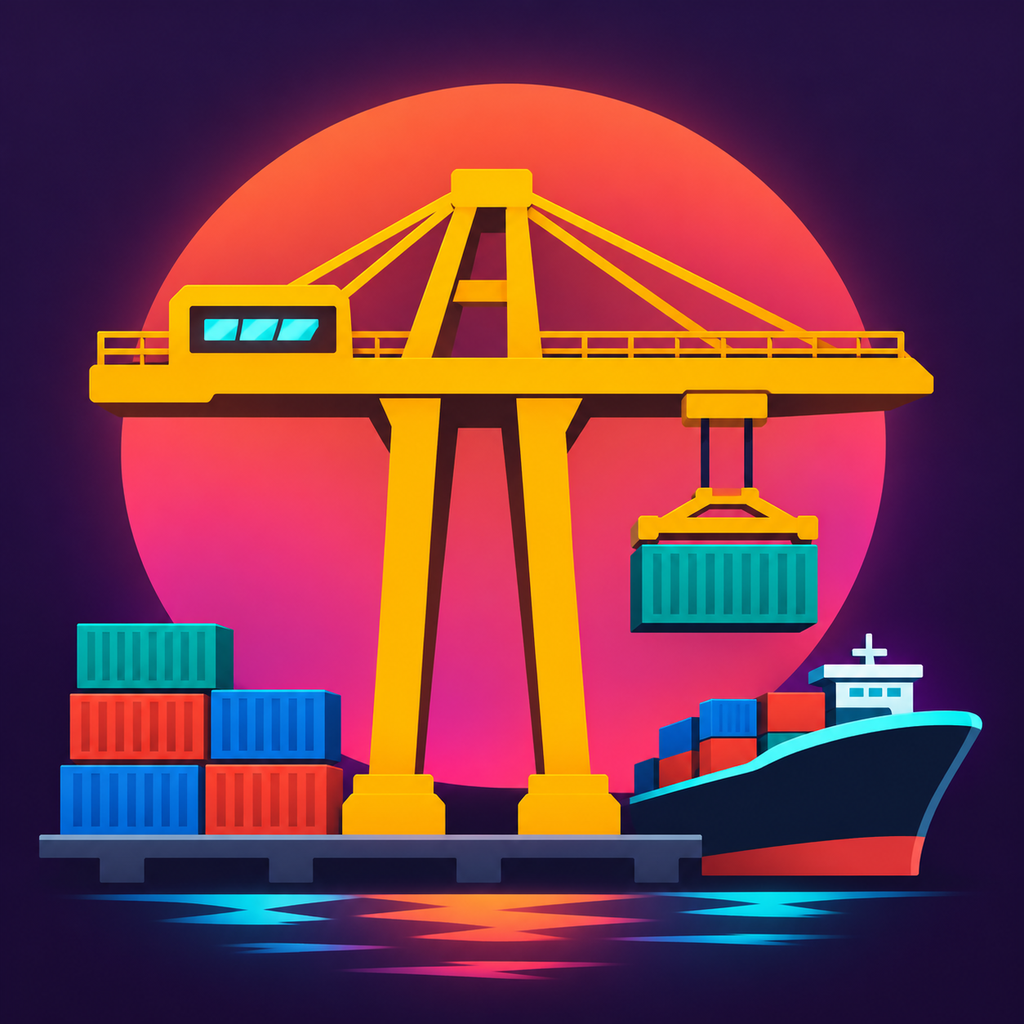
A quay crane, also called a ship-to-shore crane, stands on rails along the edge of the berth. It has a long boom that reaches over the ship, and a trolley that runs along the boom. The trolley carries a spreader, a frame that locks onto the corners of a container.
Quay cranes are the biggest and most expensive machines in the terminal. Their speed sets how fast a ship can be worked. Cranes are described by how far they reach. Panamax cranes reach across ships that fit the old Panama Canal. Post-Panamax and super post-Panamax cranes reach across wider ships.
Some cranes have a twin-lift spreader that picks up two 20-foot containers at once. A ship is often worked by several quay cranes at the same time.
Mobile harbour cranes
A mobile harbour crane is a wheeled crane, often on a base with outriggers, that can move along the quay. It is used at general cargo berths, for loads that do not fit in a container: steel coils, pipes, timber. It is also used at smaller ports without quay cranes. It uses cables and a hook or grab instead of a container spreader.
Between the quay and the yard
Yard trucks
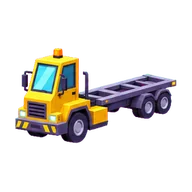
A yard truck, also called an internal truck or terminal tractor, pulls a trailer or chassis inside the terminal. It does not use public roads. It carries boxes between the quay and the yard. Several run in a loop, so the quay crane always has a box ready.
Automated guided vehicles (AGVs)
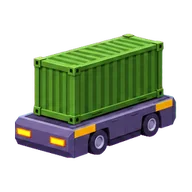
An AGV is a driverless vehicle that follows a programmed route, guided by magnets, transponders or sensors. In automated terminals, AGVs carry boxes between the quay and the yard in place of yard trucks. A control system sends each vehicle where it must go.
Straddle carriers
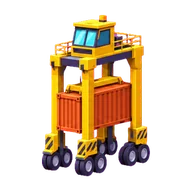
A straddle carrier is a tall machine that drives over a container, grips it from above, lifts it and carries it. It can also stack boxes a few high. Because it lifts and carries, a straddle carrier terminal can do without yard trucks and yard cranes, with one machine type doing both jobs. Some straddle carriers are automated.
In the yard
How these machines shape the stacks is covered in container yard stacking explained.
Rubber-tyred gantry cranes (RTGs)
An RTG is a large frame on rubber tyres. It straddles a block of stacks, usually several rows wide, and lifts boxes with a hoist. It can drive from block to block. This makes RTGs flexible. They are common in terminals that need to move cranes to where the work is.
Rail-mounted gantry cranes (RMGs)
An RMG does the same job on rails. It cannot change blocks easily, but it can be larger, faster and electric, and it can stack higher and wider. Rail-mounted cranes are common in high-volume terminals and at rail yards, where they load trains.
Automated stacking cranes (ASCs)
An ASC is an automated rail-mounted crane that works a yard block without a driver. Blocks are laid out so that vehicles deliver and collect boxes at the block ends. The crane does the stacking inside the block. Automated yards need good software to decide which box goes where.
Empty container handlers
An empty handler is a lift truck built for empty containers. Because empties are light, it can stack them higher than loaded boxes. Empties are stored in a depot, where the handler keeps them in tidy stacks, and loads them onto trucks when a customer needs one.
Reach stackers
A reach stacker is a mobile machine with a boom that can lift a container from the ground and stack it. It is flexible and often used in smaller terminals and for odd jobs. This guide does not cover it in depth.
At the gate
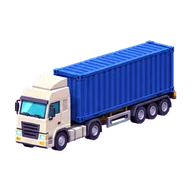
Road trucks are not owned by the terminal. They carry boxes to and from the gate. Inside the gate, trucks are directed to the right yard block. In busy terminals, a truck appointment system spreads arrivals through the day.
Which machine for which terminal?
There is no best machine. Each system has trade-offs.
| System | Strength | Trade-off |
|---|---|---|
| RTG and yard trucks | Flexible, widely used | Needs many drivers and trucks |
| RMG | Fast, electric, high stacks | Fixed to its rails |
| Straddle carriers | One machine does everything | Lower stacks, more floor space |
| ASC and AGV | Few staff, steady pace | Very expensive, needs software |
The terminal's size, budget, land and cargo decide the mix.
In the game
How it works in TermOps
Each machine in the guide appears in the game, one by one, as you go through the ports.
- Yard trucks and road trucks are in Training. You park them at lane spots and send yard trucks to the quay.
- The yard crane and quay crane do one move at a time. A yard crane's move takes longer the farther it has to reach.
- Straddle carriers (from Durban) can be commanded box-first or machine-first. Some drive themselves from Los Angeles.
- Rail-mounted gantry appears in Gdańsk.
- Empty handler works the empty depot from Melbourne.
- Automated stacking cranes arrive in Jebel Ali. You serve them from the block ends. AGVs arrive in Singapore and drive themselves.
- Twin lift is on super post-Panamax cranes, from Jebel Ali.
- Mobile harbour crane works the general cargo berth at Jebel Ali, where you load coils, pipes and timber.
Read the machine's name in the fleet strip, and tap its chip to see what it is doing.
FAQ
What is the difference between an RTG and an RMG?
An RTG runs on rubber tyres and can move between blocks. An RMG runs on fixed rails. RMGs are often larger and faster, and many are electric. RTGs are more flexible, and RMGs are better for high-volume blocks.
What does a straddle carrier do?
A straddle carrier drives over a container, lifts it and carries it. It can also stack boxes a few high. One machine therefore does the work of a yard truck and a yard crane, which is why some terminals choose straddle carriers.
What is an AGV in a port?
An AGV is an automated guided vehicle. It is a driverless vehicle that carries containers between the quay and the yard, following a programmed route. It replaces yard trucks in automated terminals and is controlled by software.
Try it. Command a quay crane in a five-minute shift.
Play TermOps